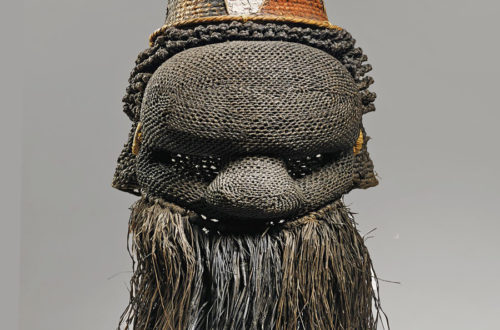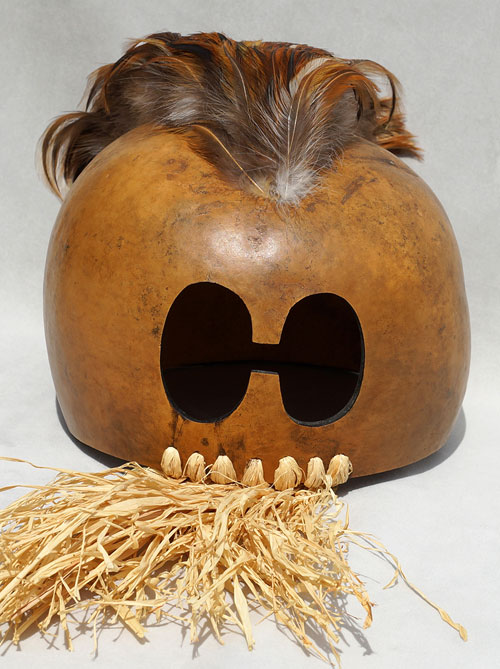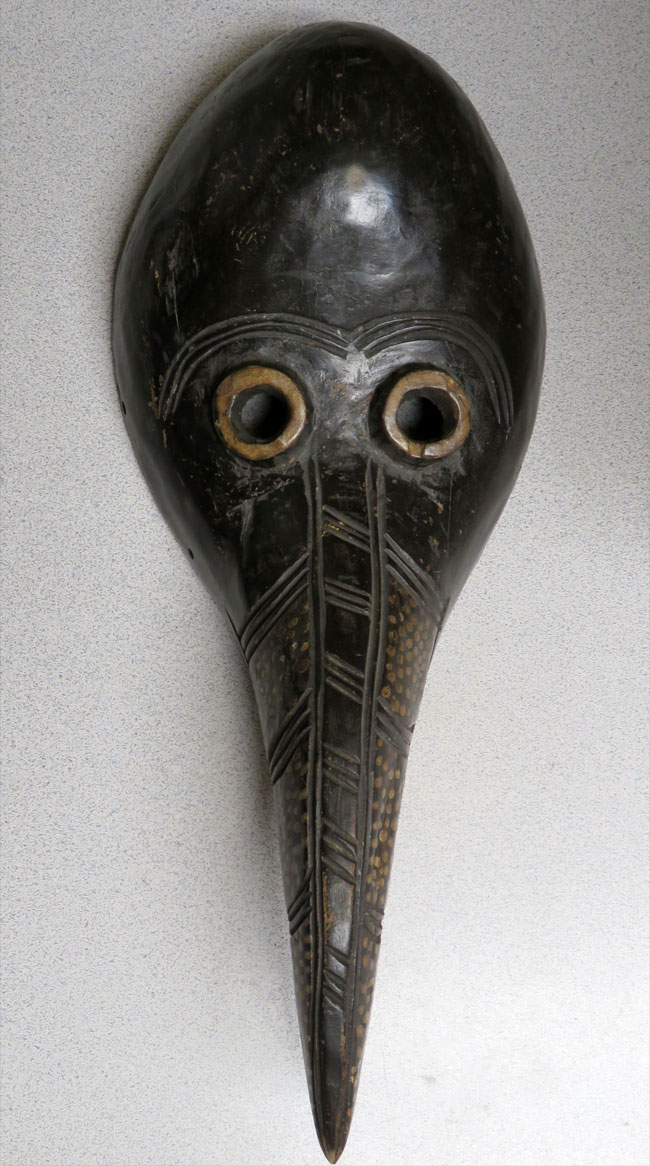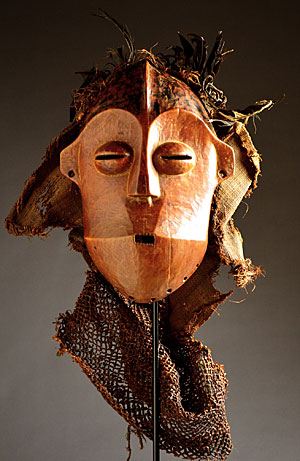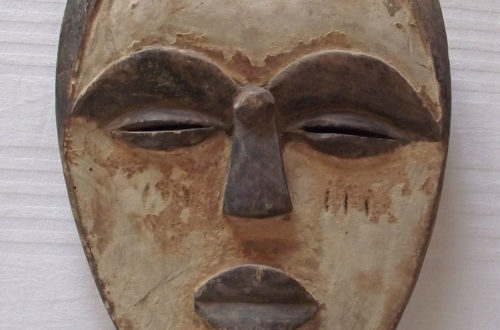
Q: I purchased this in DRC in 2010. Ben, 1533 A: Normally I need to get more information from people who want me to identify their Mystery Mask. No problem here. I know exactly what this one is. I found that AfricaDirect.com has an almost identical piece for sale. Here’s what they have to say. I haven’t changed their spelling. Like Ben’s mask, their Lele is a carefully made reproduction you can buy for a low price. An equally handsome authentic version of the same mask could not be afforded by 99% of us. The Leele live in the confluence of the Sankuru and Kasai Rivers in territory which adjoins…
-
-
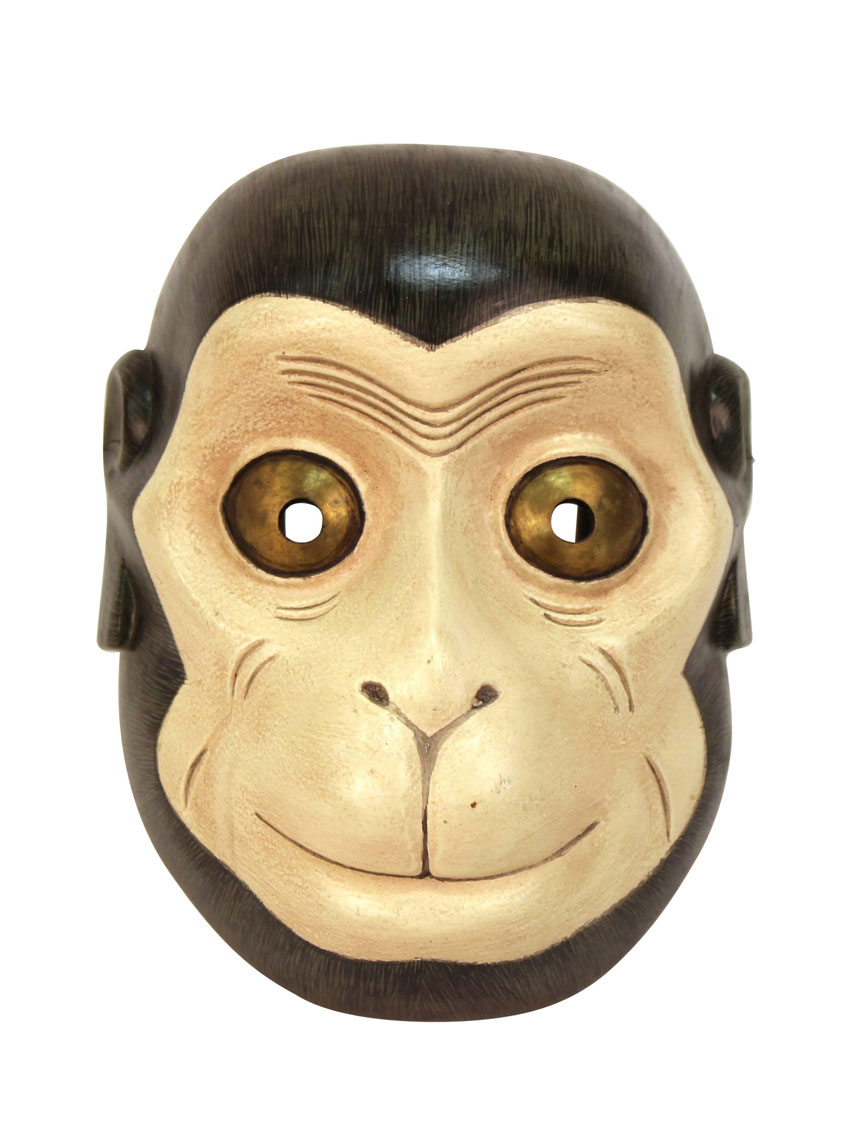
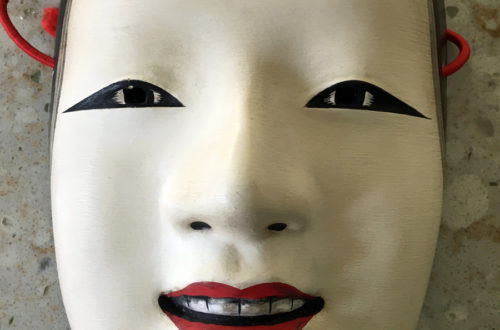
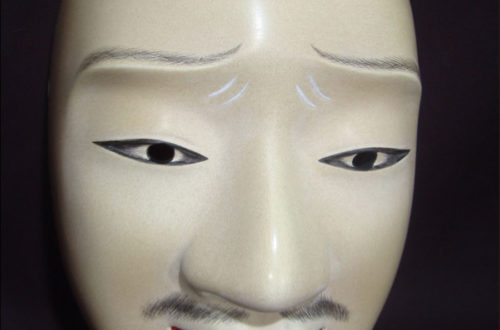
Japanese Noh theater monkey mask
This famous monkey mask, often called Saru from the Noh theater, was made during the Showa period between 1926-1989. Even though it looks brand new, it’s probably 50 years old. The following maybe more than you want to know… A collective name for Noh and kyōgen used until the start of the Meiji era. Sarugaku derives from sangaku, which came to Japan from the Tang Dynasty during the Nara era and was combined with ancient Japanese comedies. Sarugaku flourished during the Heian and Kamakura eras, and was at the time strongly comedic and broad based, including skits, acrobatics and magic. In the middle of the Kamakura era Sarugaku split into…
-
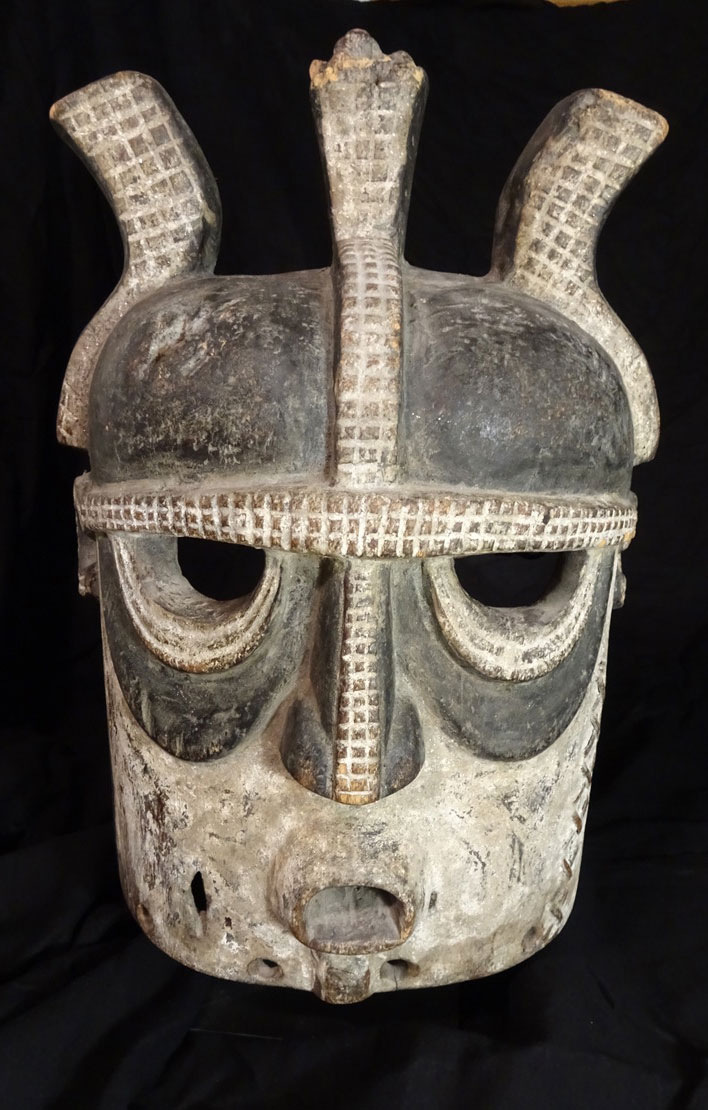
Rare Bindji mask from DRC
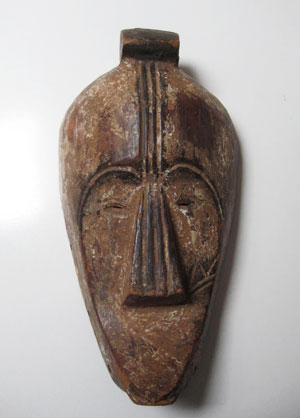
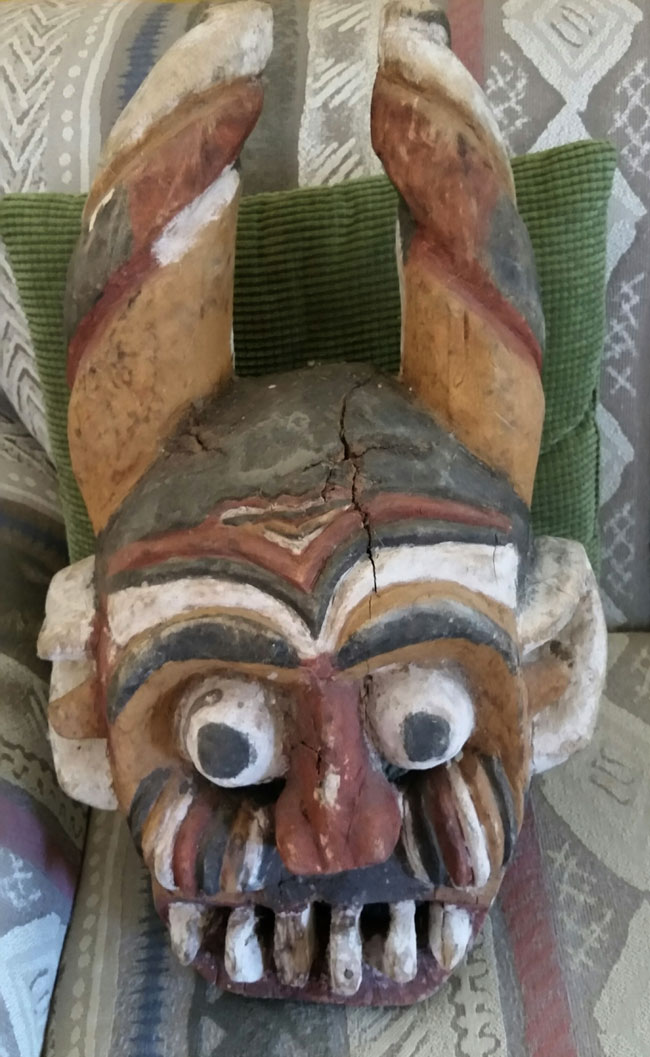
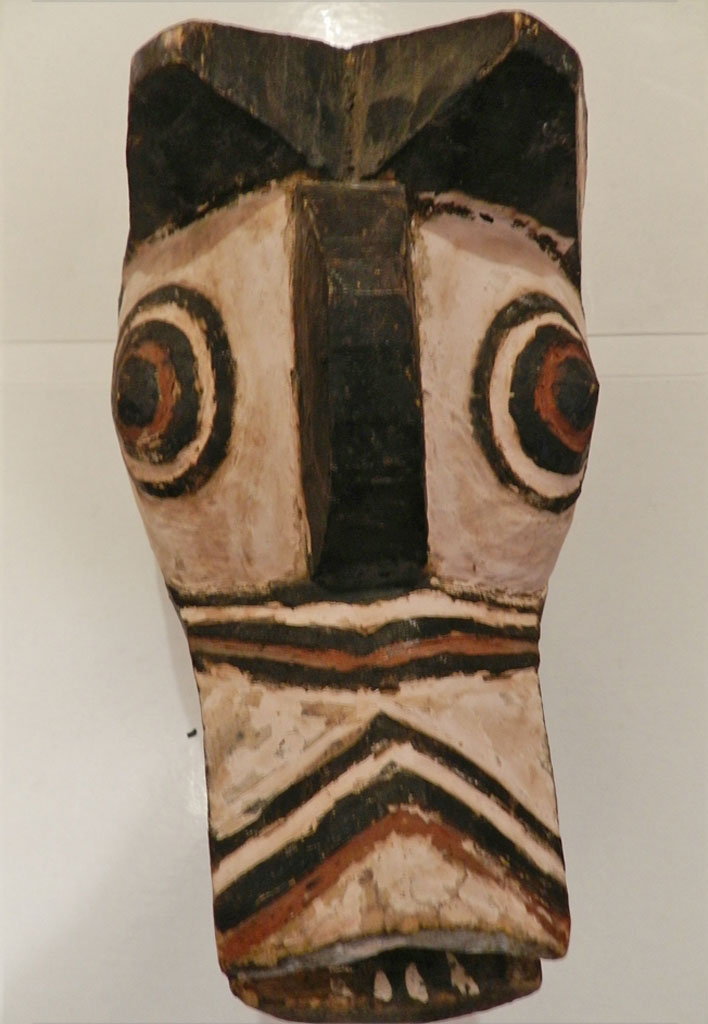
Q: This mask does have some history. Me and my father worked in the Democratic Republic of Congo. While there we purchased a few masks, some of which are tourist pieces, but every now and then we got a good one. This one was given to us as a farewell present when we left. But I have no info about where it is from and if or not it is old. Judging by the wood it dose have some age to it. It also seams to have been repaired at some point. The repair is one of my favorite features of it. Here are some pictures. Please let me know…
-
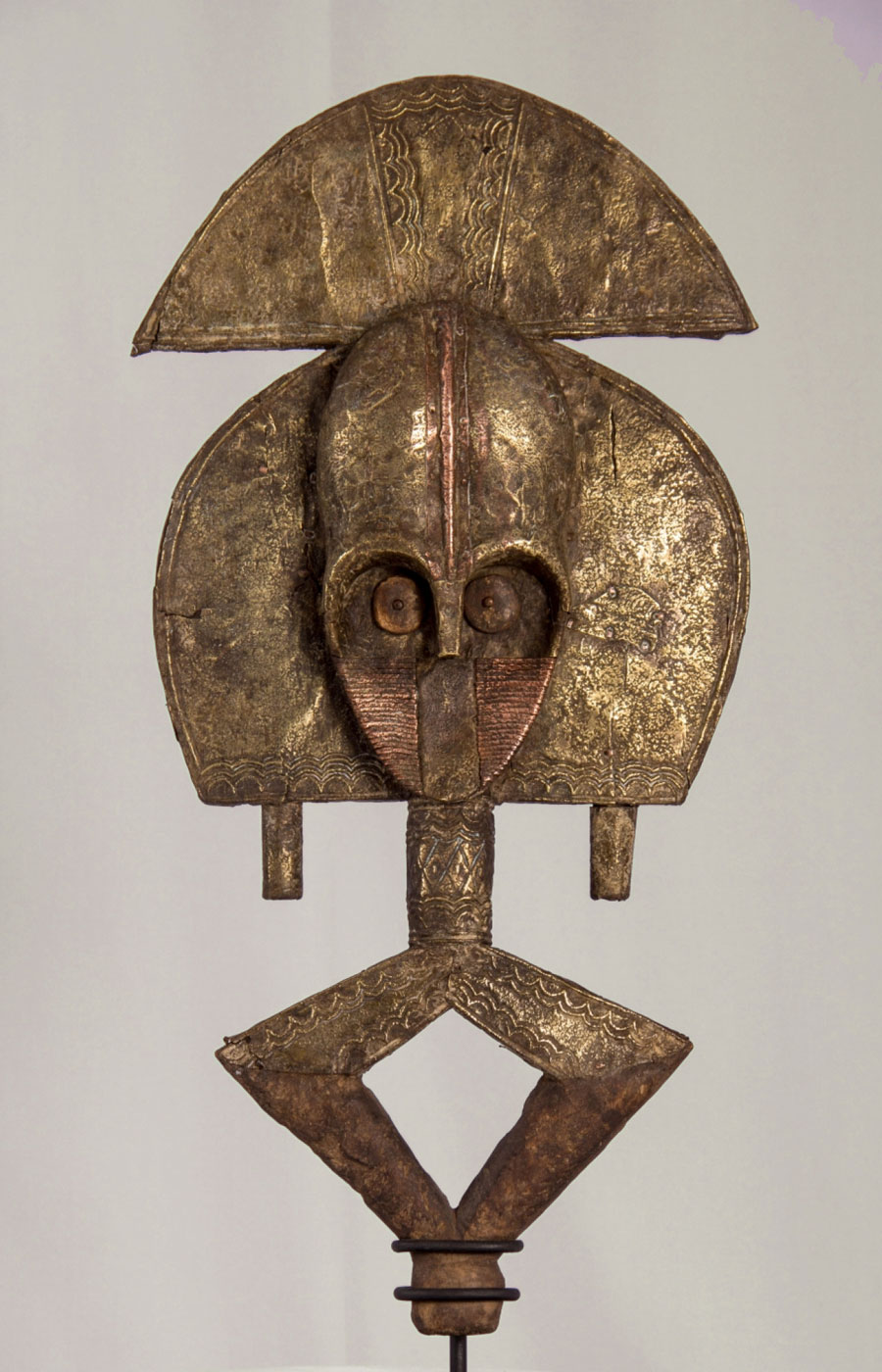
Kota reliquaries are often in mask collections
That is because they’re so beautiful. This abstract sculpture would have stunned the great European artists of the 19th century. The Kota live in villages comprising two or more clans. Clans in turn comprise several lineages or family groups that trace their descent from a common lineage ancestor. This is an important point related to their art, for like the Fang, the Kota revere the relics of ancestors. Ancestor worship formed the core of the family group’s religious and social life. At the death of a chief, the initiates would take from the body of the deceased various relics, which were then decorated with metal and rubbed with powders of…