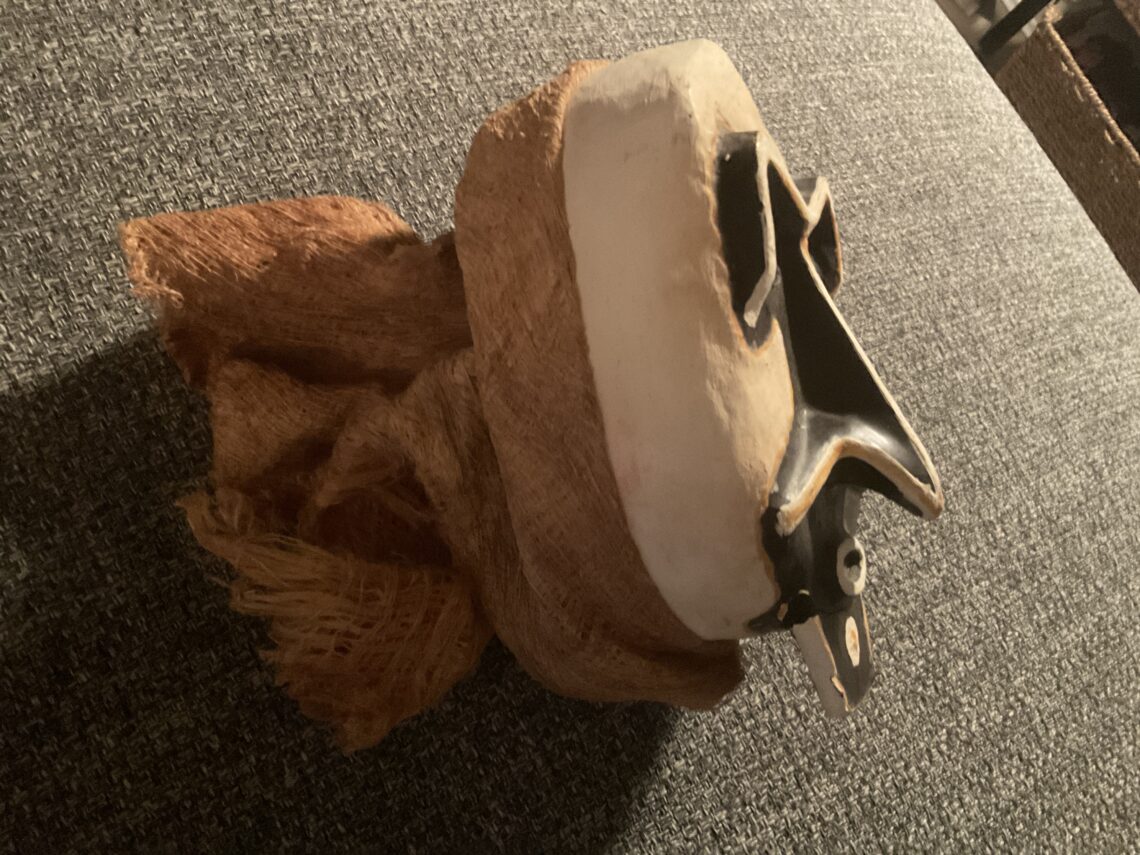
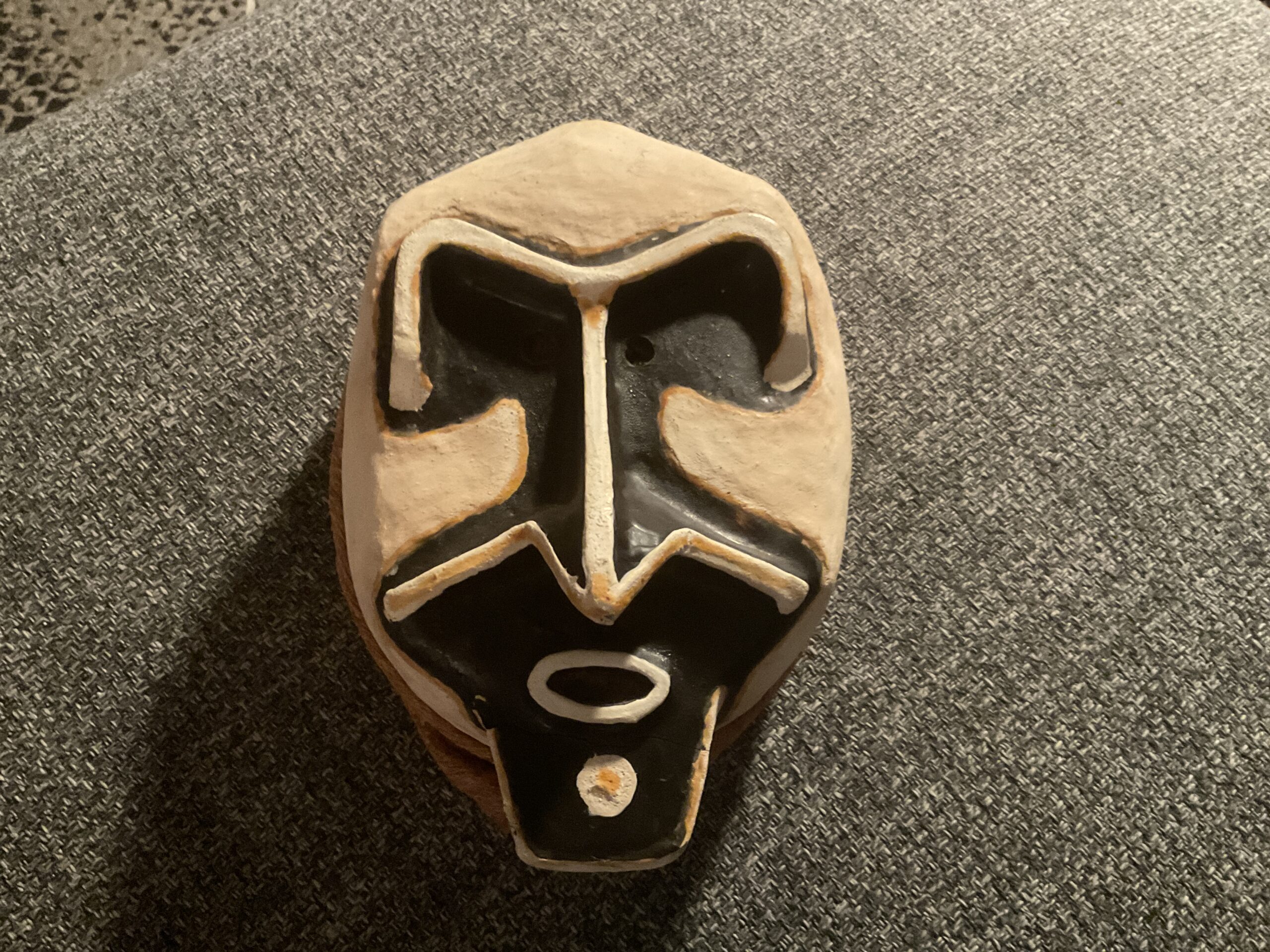
Recently, we received an extraordinary mask sent by one of our followers. It did not arrive as a simple object, it arrived as a fragment of living history from the Amazon, carrying the voice of a people whose relationship with the spiritual world remains one of the deepest and most coherent in South America.
This piece belongs to the Piaroa people, also known as Wärime, Huottüja, or De’aruhua, an Indigenous community that inhabits the Orinoco River basin, between southern Venezuela and eastern Colombia.
More than a mask, this is an expression of ritual art connected to one of the most important ceremonial systems in their culture: the Warime.
 The Piaroa people and their relationship with the sacred
The Piaroa hold a complex and deeply ethical worldview. For them, spiritual knowledge is not power to dominate, but a responsibility to maintain balance in the world.
Their rituals are not meant to control supernatural forces, but to live in harmony with them.
Within this tradition, the Warime holds a central place.
The Warime is a major communal ceremony that can last several days and involves music, dance, mythic storytelling, and the appearance of spiritual beings represented through masks and ritual costumes. These figures embody spirits, animals, and primordial forces that form part of the Piaroa creation narratives.
The mask: materials shaped by the land
This piece is a remarkable example of Piaroa ritual art in both construction and material:
-
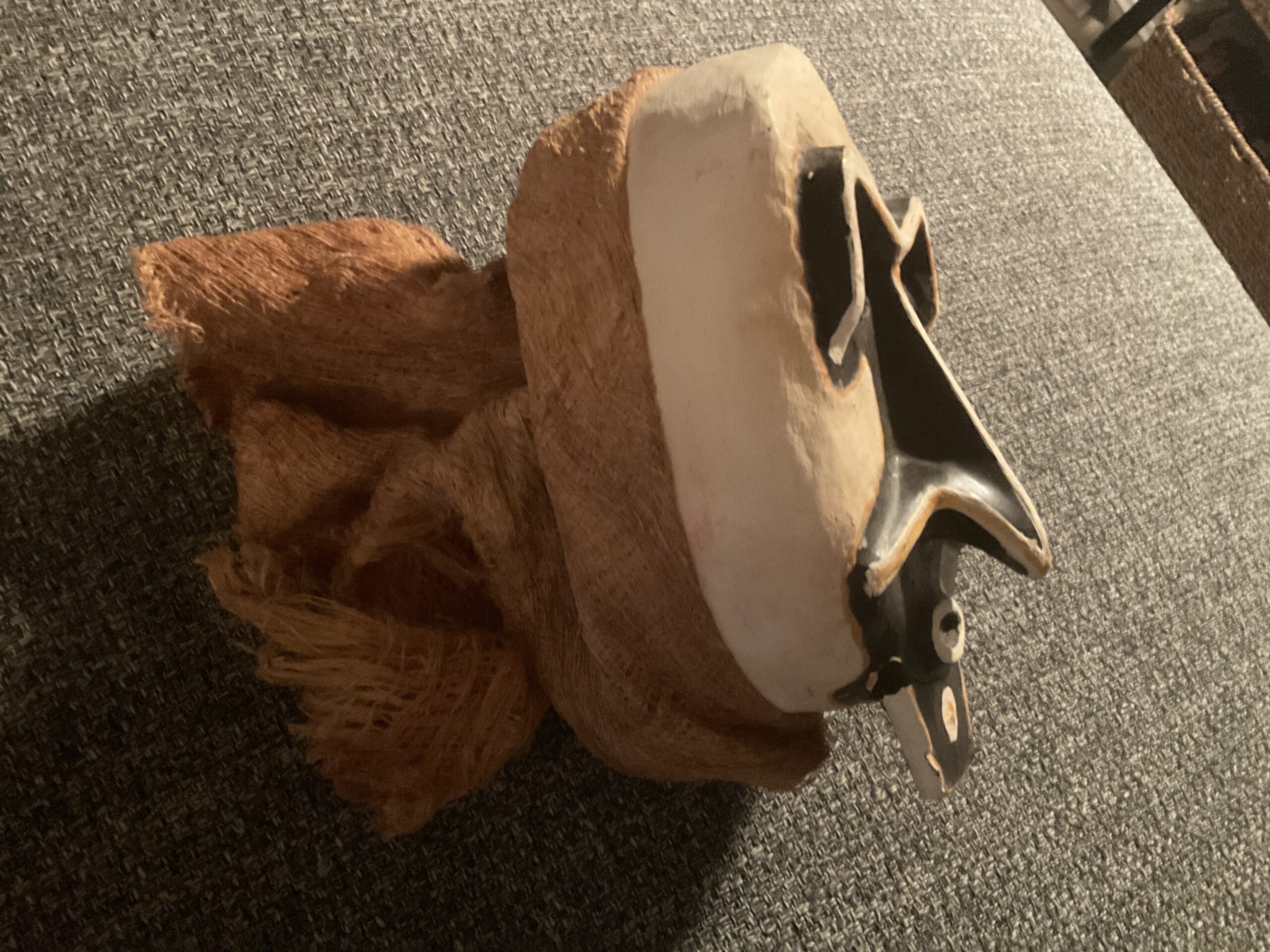
A face modeled in blackened beeswax, a documented technique in several Amazonian ceremonial masks.
-
White clay accents used to highlight symbolic facial features.
-
Natural fibers and plant-based textiles completing the structure, sourced directly from the surrounding rainforest.
Nothing in this mask is decorative by chance. Every material comes from the same ecosystem that sustains the community. In Piaroa tradition, nature is not a resource it is a relative.
Who does this mask represent?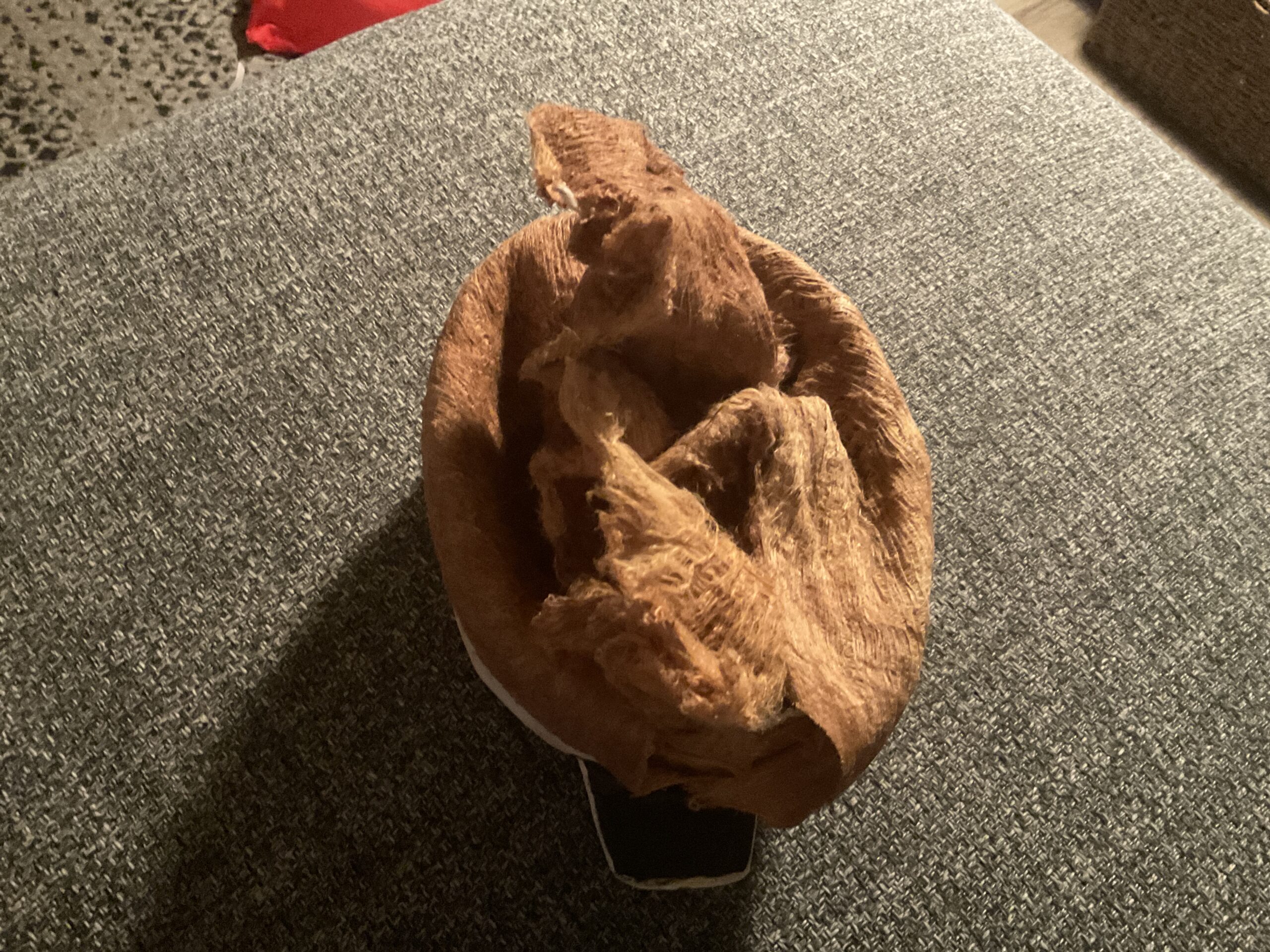
Within the Warime ritual system there are many figures:
-
animal spirits
-
mythological beings
-
entities tied to the creation of the world
-
guardians of ancestral knowledge
In many cases, it is not possible to identify the exact character of a mask outside its ceremonial context, since its full meaning depends on the songs, dances, and narratives that accompany it during the ritual.
What we can say with certainty is that pieces like this were traditionally made:
-
for ceremonial use within the Warime
-
and, in some cases, also for exchange with travelers and explorers, especially from the late 19th century and throughout the 20th century
Mask, transformation, and presence
In the Warime, wearing a mask is not acting. It is becoming.
The dancer does not “perform” a spirit during the ritual, they embody it. The mask allows this symbolic passage between the human and the spiritual. It is a threshold, not a costume.
For this reason, these pieces were not displayed casually. They were kept protected and activated only when the community needed to renew its relationship with the forces that sustain the world.
At Mask of the World, we believe every mask deserves more than aesthetic admiration. It deserves context, respect, and memory.
This Piaroa piece is not only a beautiful object. It is a fragment of a ritual system that is still alive. An echo of chants that can still be heard in the Orinoco basin. A reminder that Indigenous cultures do not belong to the past they belong to the present.