Mexico has one of the richest mask traditions in the world. Not because of museums, and not because of collectors.
Because masks in Mexico are still alive.
In villages across the country, masks continue to appear in dances, feast days, processions, Carnival celebrations, Holy Week rituals, and community reenactments. These events beautifully blend Indigenous cosmology with Catholic symbolism.
A mask in Mexico was rarely created as a static art object. It was made to move, sweat, dance, frighten, entertain, transform, or invoke.
Once you understand that, you begin to see the three very different worlds that Mexican masks inhabit:
- Genuine ceremonial and dance masks made for use in community traditions.
- Collector and folk-art masks made by master artisans as fine art.
- Decorative tourist masks artificially aged or invented for the souvenir market.
To inexperienced collectors, all three can look convincing. But they are not the same thing.
The First Thing Most Collectors Get Wrong
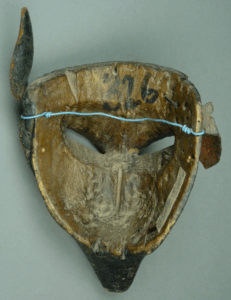
Many beginners assume “old-looking” means authentic. In Mexican mask collecting, that assumption will cost you money fast.
Artificial aging is extremely common. Some masks are smoked, stained, scratched, dirtied, or chemically treated (sometimes even buried in mud or treated with acid) specifically to imitate age and ritual use. Others are assigned invented village origins or falsely connected to ceremonies that never used masks at all.
This does not mean all modern masks are fake. Mexico still has extraordinary living mask traditions, and master carvers continue to produce brilliant work. But collectors must learn to separate authentic ceremonial use and legitimate contemporary folk art from decorative reproductions made for tourism.
Ceremonial Masks vs. Tourist Masks
The easiest way to understand the difference is this: A ceremonial mask was made to function within a tradition. A tourist mask was made to satisfy a buyer’s expectation of what “Mexican folk art” should look like.
| Feature | Authentic Ceremonial Masks | Tourist / Decorative Masks |
| Primary Purpose | Built for movement, ritual, and community tradition. | Built to hang symmetrically on a suburban wall. |
| Wear & Patina | Natural sweat staining inside, oily residue from skin contact, authentic strap wear. | Artificial aging via smoke, stains, faux wormholes, or uniform chemical distressing. |
| Design | Often asymmetrical; visibility holes are practical (sometimes looking through the mouth or nostrils). | Exaggerated carving, oversized horns, over-the-top “tribal” aesthetics, theatrical colors. |
| Visual Appeal | Can sometimes look crude or “less impressive” because they were built to be seen from a distance while moving. | Highly polished, perfectly symmetrical, and optimized for static display. |
Collector’s Tip: Ironically, authentic masks can sometimes appear less visually “perfect” than reproductions. They were built for the chaos of a festival, not the stillness of a gallery wall.
Mexico’s Mask Traditions
Are Deeply Regional
One of the biggest mistakes collectors make is talking about “Mexican masks” as if they were one unified tradition. They are not. Mexico contains hundreds of masking traditions connected to specific Indigenous groups, dances, and local histories.
Pascola Masks (Yaqui / Mayo Traditions)
Among the Yaqui and Mayo peoples of northern Mexico, Pascola masks represent sacred human and animal characters connected to ceremonial performance. These masks are often carved from soft wood and feature distinct human facial forms, mirrors, and tufts of wild animal hair (like horsehair or goat hair).
Authentic older Pascola masks frequently show heavy interior staining from actual use. Collectors who study these traditions eventually learn to identify not only regions, but the specific handiwork of individual master carvers.
Tecuán / Jaguar Masks
The Tecuán dance tradition, associated heavily with Guerrero and surrounding regions, revolves around the jaguar, a figure with deep pre-Hispanic symbolic importance.
These masks range from highly expressive jaguar faces to hybrid human-animal forms. Importantly, many authentic Tecuán masks require dancers to look through the open mouth rather than eye holes. That kind of restrictive, functional design is often completely missing in purely decorative reproductions.
Carnival and Dance Masks
Throughout regions like Michoacán, Tlaxcala, Puebla, and Chiapas, masks appear in Carnival traditions, “Moors and Christians” dances, devil dances, and Viejitost (old man) dances. They depict everything from Spanish conquistadors and saints to colonial caricatures and supernatural beings.
What Serious Collectors Actually Look For
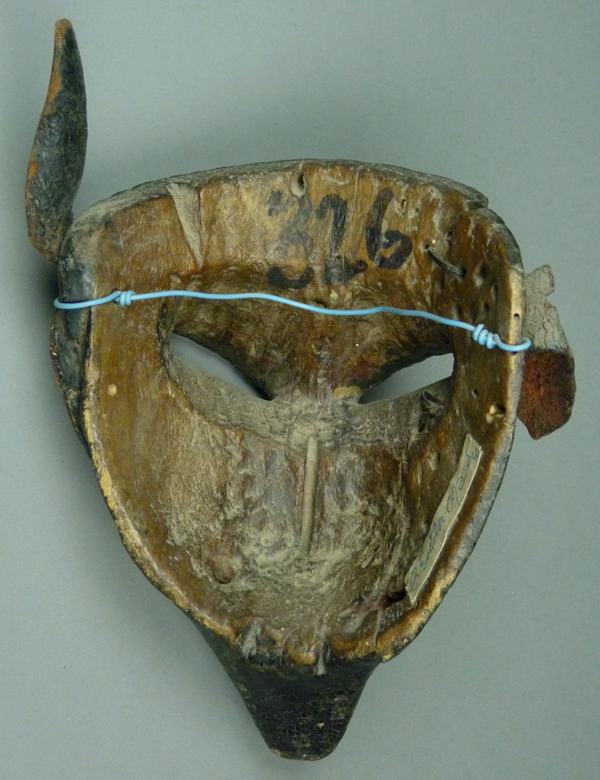
Experienced collectors rarely judge masks based on “beauty” alone. They look for consistency. The back of a mask often tells the real story. That is where sweat staining, handling wear, tool marks, strap aging, and wood type become visible. In many cases, the interior is more important than the front.
Before buying, ask yourself these diagnostic questions:
- Does this style actually belong to the claimed region?
- Does the wood type make sense for that specific tradition?
- Is the wear natural or artificially created?
- Does the mask function as a dance object (can someone actually see and breathe through it)?
- Is there documented provenance?
- Does the paint appear layered naturally over time (repainted for different festival seasons)?
The Most Important Question to Ask
Instead of asking: “Is this mask old?”
Ask: “What tradition does this belong to, and does the object make sense within that tradition?”
That question changes everything. Authentic Mexican masks are not random folk curiosities. They are fragments of living ceremonial systems, community identity, Indigenous continuity, and regional storytelling. Once you begin seeing them that way, collecting becomes far more interesting and far more rewarding.