From the blog
The masks click to explore.
Six pieces from Nepal, Mustang, Bhaktapur, the Middle Hills, and the broader Himalayan region. Click any mask to view full size with cultural notes.
Where Hinduism and Buddhism converge in the Himalayas and produce some of the most spiritually dense mask traditions on earth. Troy has trekked to Everest Base Camp three times (Paula only once so far). The masks they encountered along the way are part of why they keep going back.
Nepal occupies a singular position in world mask traditions. It sits at the confluence of Hindu and Buddhist practice, the birthplace of the Buddha, and one of the great centers of Tantric Hinduism and its masks reflect that convergence in ways that make them unlike anything else in collecting. A single Nepalese mask may carry iconography from both traditions simultaneously, embodying deities that belong to neither and both.
The Newar people of the Kathmandu Valley are the primary mask-making culture, a community that has maintained its artistic and ceremonial traditions through centuries of political change. The Mahakali Naach dance and the Indra Jatra festival involve dozens of masked figures representing Bhairava, the Kumari (living goddess), and various ancestral spirits, ceremonies that continue in the streets of Kathmandu today. Beyond the valley, in the Middle Hills and the high Himalayan regions, shamanic traditions of the Tamang, Gurung, and Sherpa peoples produce masks of a completely different character, rougher, older-feeling, and connected to animistic practices that predate both major religions.
Troy has trekked to Everest Base Camp three times. Along the trails, in the teahouses, the monasteries, and the village festivals, the mask traditions of the Himalayan peoples appear in contexts that most visitors walk straight past. Paula also knows this trail, from the inside. This is a region the team has encountered not from a distance but on foot, at altitude, in the places where these objects actually live.
"The Cham dance masks at Tengboche Monastery are not decorative objects. The monks there have been performing the same ceremony, with the same mask forms, for longer than most nations have existed. You pass through on the way to Base Camp and most people take a photograph and move on. The ones who stop and ask questions learn something they can't unlearn."
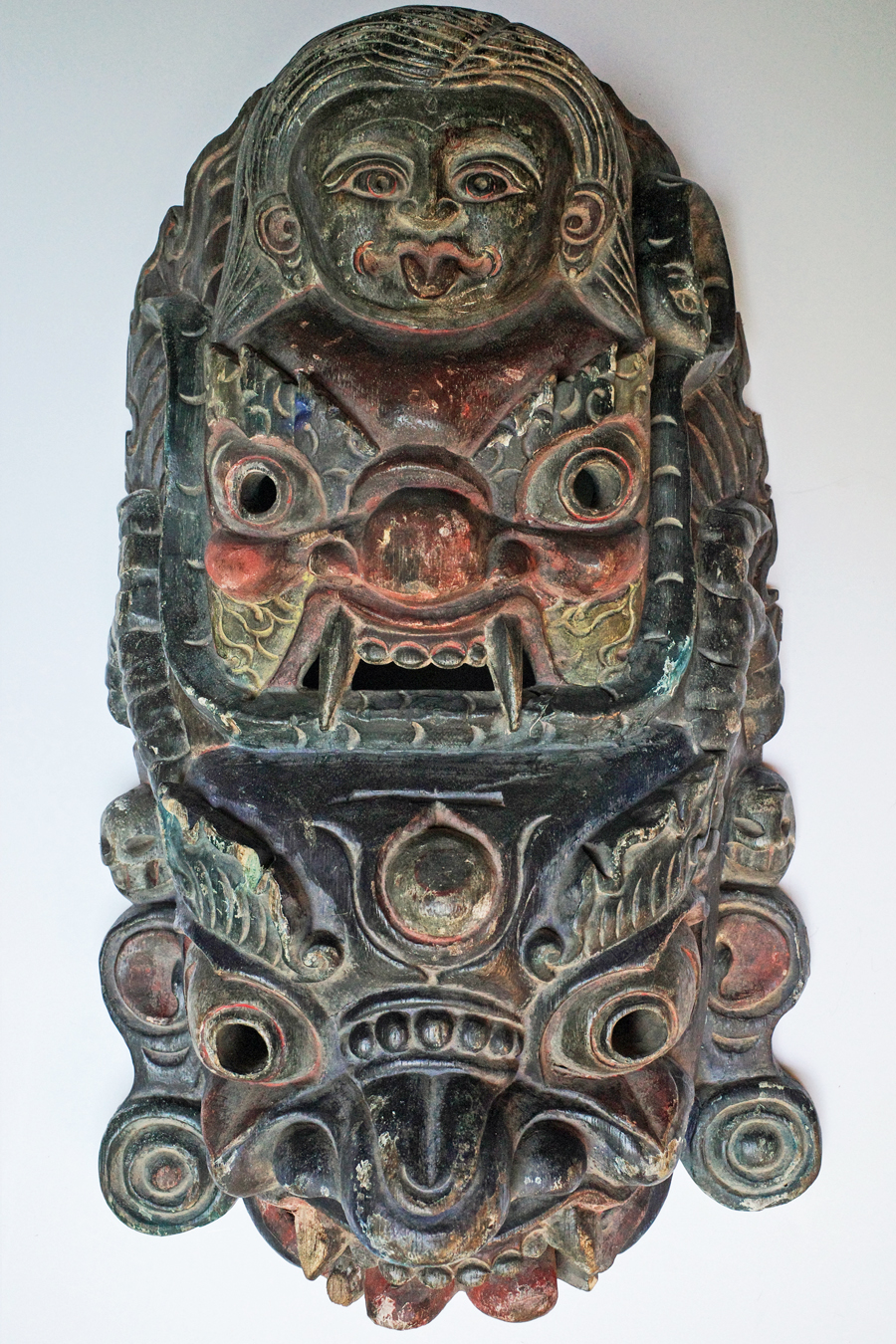
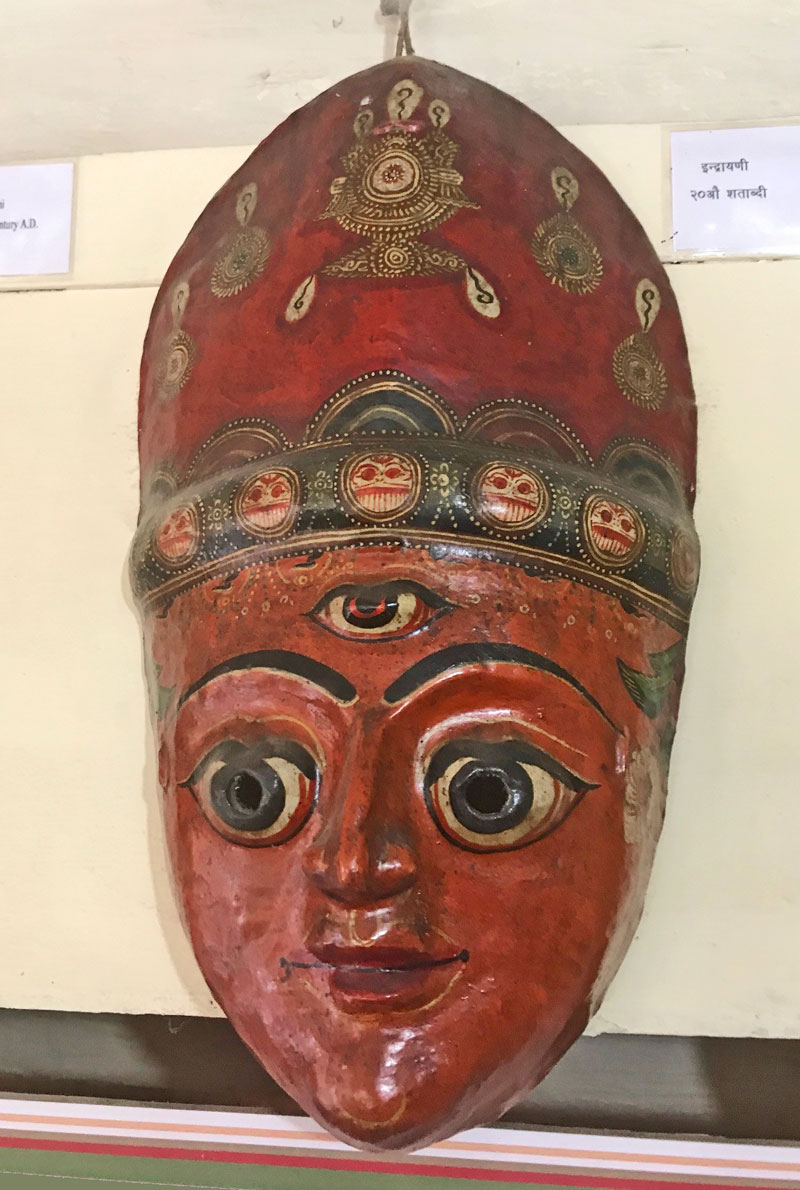
- Troy YohnThe Newar people of the Kathmandu Valley are Nepal's primary mask-making culture, producing work of extraordinary technical refinement. The Indra Jatra festival, held annually in Kathmandu, is one of the largest mask festivals in Asia, with Bhairava, the Kumari, and ancestral spirits all appearing in masked form. The Mahakali Naach dance showcases masks representing different deities and spirits in a performance tradition that connects performers directly to the divine. The Indrayani mask in our collection, one of the eight dancers in the Bhairabs drama originating in Bhaktapur, is estimated to be 75 years old and represents a level of craftsmanship that, as the original caption notes, is no longer produced. A piece like this is historically significant.
The Cham dance is a Tibetan Buddhist ritual performed at monasteries across Nepal, Tibet, and the Himalayan region, including along the Everest Base Camp trekking route. Performers wear elaborate masks representing wrathful and peaceful deities, dharmapalas (protectors of the dharma), and figures from the Bardo Thodol (Tibetan Book of the Dead). This is not performance for an audience, it is active religious ceremony, believed to purify the land and protect the community. The masks used in Cham are religious objects of the highest order. Understanding which pieces come from active monastery use versus commercial production requires exactly the kind of field knowledge that comes from actually being in these places.
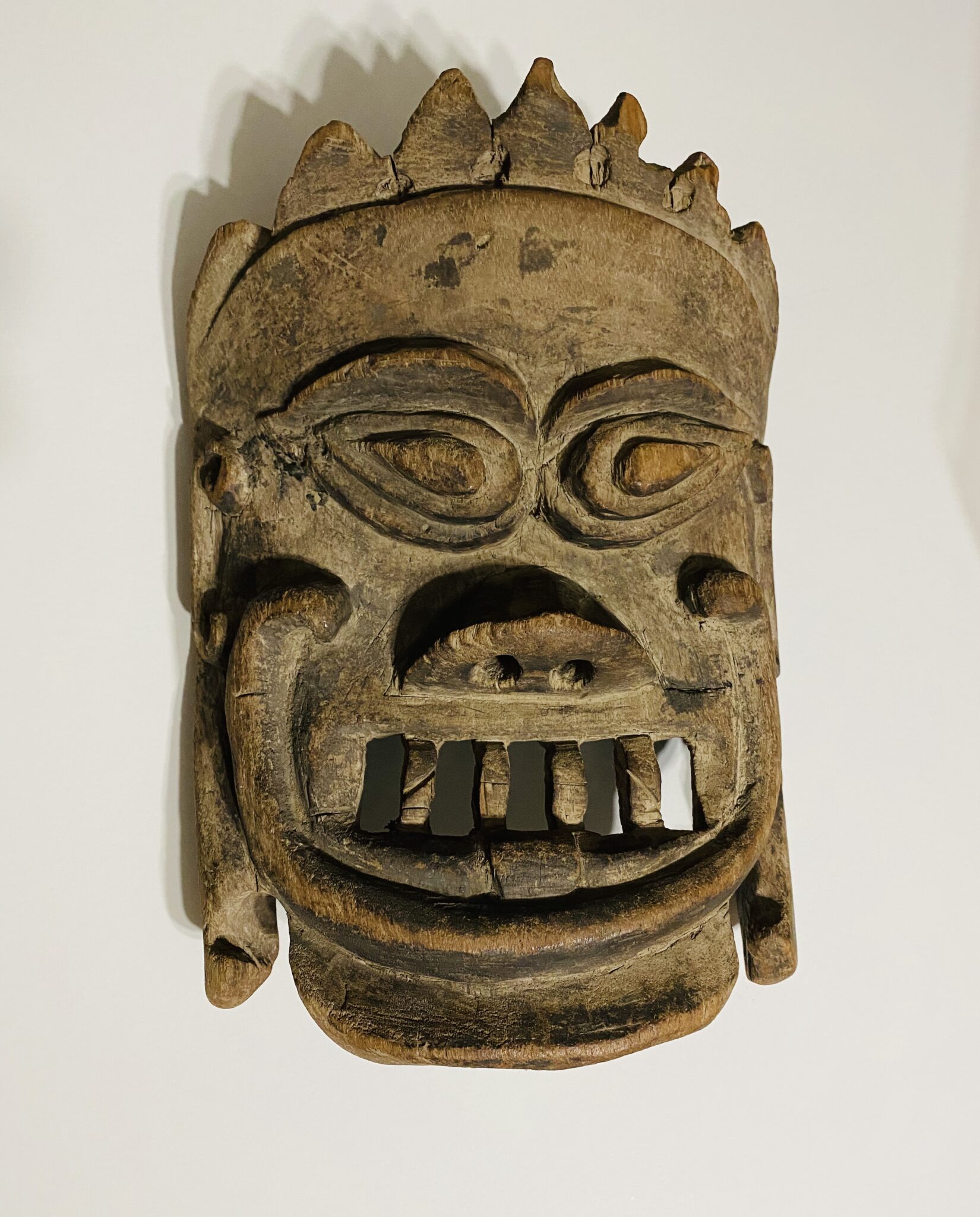
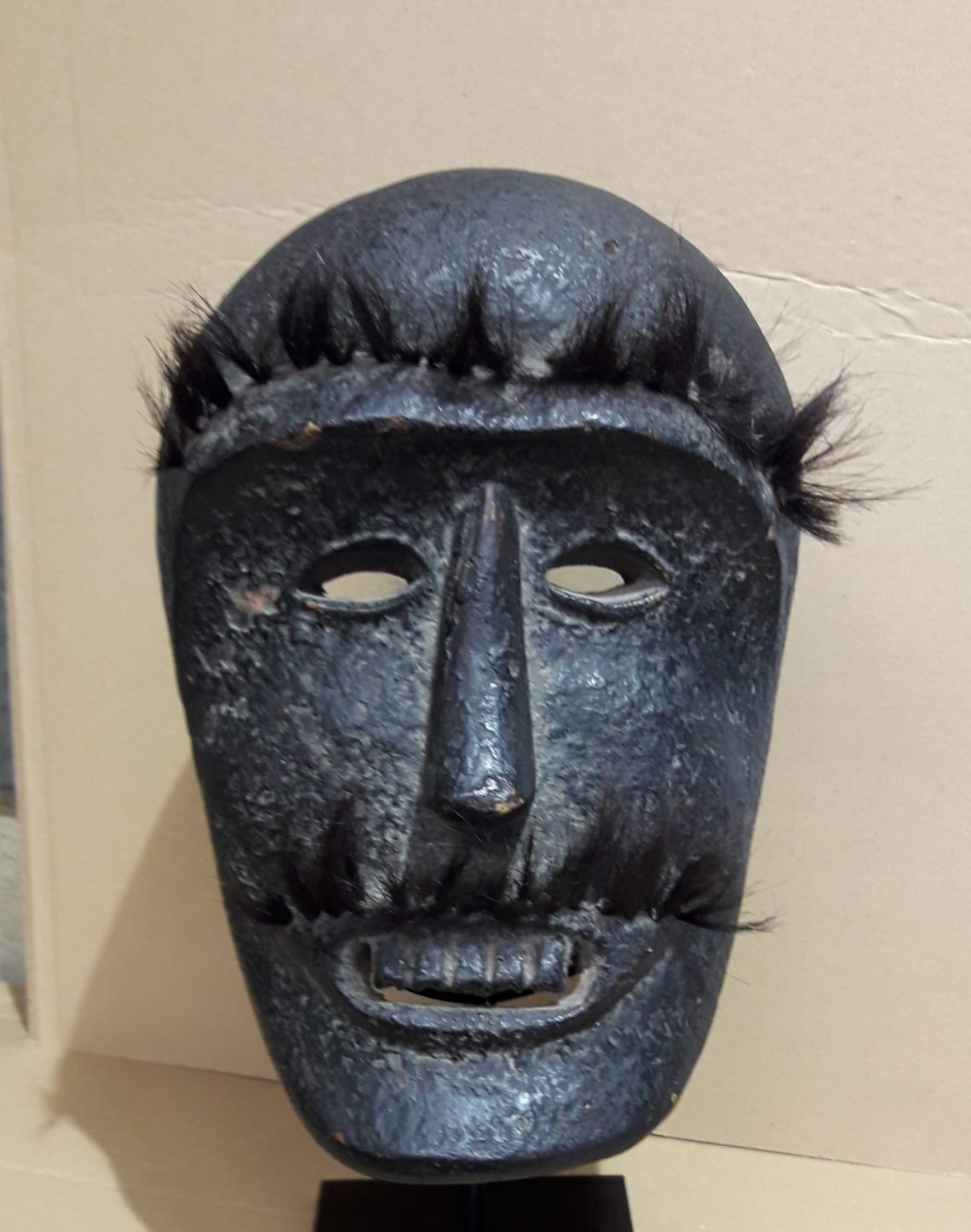
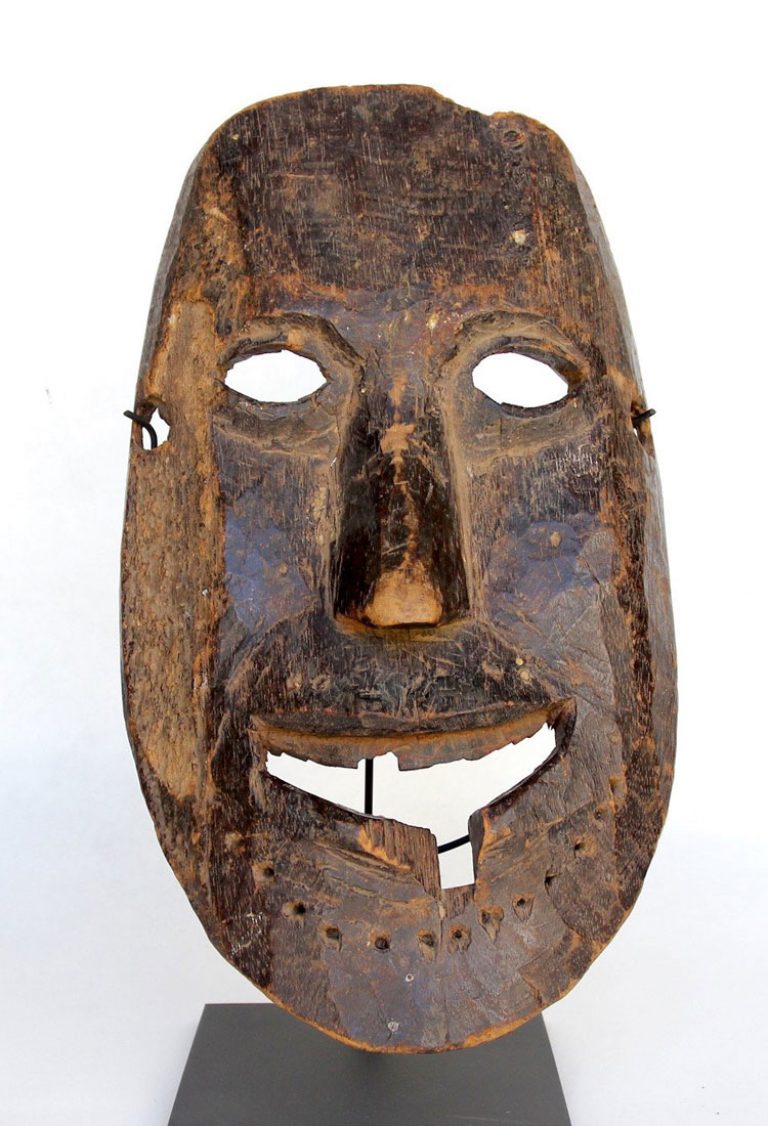
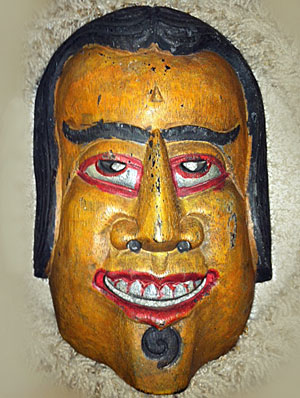
The oldest stratum of Nepalese mask practice comes from the shamanic traditions of the hill peoples, Tamang, Gurung, Sherpa, where jhankri (shamans) use masks in healing ceremonies that predate both Hinduism and Buddhism in the Himalayan region. The shamanistic mask in our collection, crudely carved from a tribal group in the Middle Hills, captures exactly this quality: rough appearance, strong appeal, authentically old. This is not refinement for its own sake. It is an object made to work, in a ceremony that needed it to work. The Mustang region mask, where the wearer looks through the teeth rather than the eyes, represents an even more unusual regional variant that challenges assumptions about how masks function.
Six pieces from Nepal, Mustang, Bhaktapur, the Middle Hills, and the broader Himalayan region. Click any mask to view full size with cultural notes.
Nepal's mask tradition is shaped by a convergence that exists nowhere else, a thousand years of Hindu and Buddhist practice coexisting and interweaving in the Kathmandu Valley, producing a syncretic visual language that belongs to neither entirely and both simultaneously. Understanding what you're looking at requires working knowledge of both traditions.
The Newari gilded copper and carved wood pieces from Bhaktapur and Kathmandu are the best-documented collecting area within Nepal, the Valley's artistic traditions have been studied by Western scholars since the 19th century, making provenance research more tractable than in most other Himalayan categories. The shamanic and Middle Hills pieces are the opposite: less documented, more varied, requiring field knowledge that isn't easily found in published sources.
The Cham dance masks present a specific challenge: ceremonial production continues at working monasteries, and commercial production for the tourist market is widespread. The difference between the two is significant and not always visually obvious, the markers are in construction details, wear patterns, and material choices that require handling experience to read reliably.
"The Indrayani mask from Bhaktapur is 75 years old and represents a level of craftsmanship that is no longer produced. That sentence contains everything you need to know about why historical Nepalese pieces matter, the tradition continues, but the quality of a specific period doesn't."
Newari, Cham dance, Mustang, shamanic, Troy has studied the Himalayan mask traditions on foot and in the field. Send a photo and a question.